
The pandemic revealed our dangerous dependence on geopolitical rivals for everything from essential medicines to the microchips that power our lives. This vulnerability is the reason the successful reshoring of American manufacturing is a national imperative. Nearly 95% of U.S. manufacturers experienced severe supply disruptions, highlighting a clear danger to our national prosperity.
For years, the political establishment offered a false choice between managed decline and protectionism. Now, a third option, rooted in economic liberty, is advancing. The recently passed One Big Beautiful Bill Act takes a vital first step, but a full commitment to free-market principles is required to secure America’s future.
How We Got Here: The Unseen Costs of a Distorted Market
To understand the path forward, we must first diagnose how we arrived at this precarious position. America’s industrial decline was not an accident or an inevitable force of history. It directly resulted from specific policy choices that distorted the market, making it more profitable to build overseas.
The False Promise of Offshoring
Decades ago, proponents of globalism sold offshoring as a win-win. This simple calculation drove policy and corporate strategy for a generation. Consumers would get cheaper goods. Corporations would realize higher profits. Wall Street would celebrate the efficiency gains. This narrative, however, was dangerously incomplete.
It ignored the immense, unseen costs of dismantling our industrial base. It was a shortsighted bargain that slowly weakened the nation from within. The focus on quarterly earnings and cheap consumer goods obscured the erosion of our long-term productive capacity.
We traded the resilience of our communities for the fragility of extended supply lines. In the 1960s, manufacturing was a significant contributor to the U.S. economy, accounting for over 25% of the country’s GDP. Today, that figure has plummeted to just over 10%.
A Market Tilted by Government
This hollowing out was not a failure of capitalism. It was the predictable consequence of a distorted market. For decades, government policy actively punished domestic investment and production through several key mechanisms.
These policies created a hostile environment for American industry:
- Punitive Corporate Taxes: The United States maintained one of the highest corporate tax rates in the developed world. Before the 2017 reforms, the federal rate stood at a staggering 35%. This created a massive incentive for companies to move. A business could relocate its headquarters to Ireland and pay a rate of just 12.5%. This punitive tax differential made offshoring a simple matter of fiduciary duty.
- A Suffocating Regulatory State: A web of rules, often with overlapping jurisdictions and conflicting requirements, acts as a hidden tax on the economy. Studies estimate the annual cost of federal regulations is nearly $2 trillion. This burden falls heavily on manufacturers, who must navigate complex environmental, labor, and safety rules that often go far beyond common sense. This adds years of delay and millions in costs to any new domestic project.
- Irresponsible Fiscal Policy: Decades of runaway government spending, financed by debt and monetary expansion, fueled inflation. Inflation is a tax on capital. It erodes the value of long-term investments, making it impossible for businesses to plan for the future. When the value of the dollar is unpredictable, businesses are less likely to commit to multi-decade projects, such as building a new factory.
This was not a free market at work. It was a market systematically tilted by government intervention. Capital and enterprise did not flee America. A punitive policy environment drove them out.
The Erosion of the Industrial Commons
The result was the catastrophic erosion of our “industrial commons.” This is the complex, interwoven ecosystem of suppliers, skilled labor, and institutional knowledge. It is the accumulated human and economic capital of a productive society. When the major factories left, the smaller, specialized machine shops and parts suppliers followed. The demand for skilled tradespeople—the welders, the machinists, the tool and die makers—evaporated.
Between 2000 and 2010 alone, the country lost nearly 6 million manufacturing jobs. Entire communities built around these industries for generations withered. More than jobs were lost. We lost a form of irreplaceable capital. We lost the practical knowledge passed down from one generation to the next. This destruction of human and economic capital directly resulted from policies that penalized manufacturing in the United States.
The Geopolitical Trap
This self-inflicted economic decay created a dangerous geopolitical trap. We willfully outsourced the production of critical goods to authoritarian regimes. This handed them a powerful weapon to use against us.
Our supply chains for pharmaceuticals became a national security vulnerability. Our access to rare earth minerals, essential for all modern technology, became dependent on the whims of the Chinese Communist Party.
We sourced even the most advanced components for our defense systems from potential adversaries. Rampant intellectual property protection violations compounded this dependence. State-sponsored actors in China systematically stole American innovation.
They took our research and development to build their own industries. This was not a competition. It was theft on a global scale. Reducing reliance on China is, therefore, not just an economic goal. It is a national security imperative.
Nearshoring: A Symptom, Not a Cure
In this hostile environment, many companies have turned to nearshoring. They move operations to Mexico, Canada, or other nearby countries. This is a rational response to mitigate the geopolitical risk of China. It is an attempt to shorten supply chains and operate in a more stable hemisphere. Yet, nearshoring vs reshoring presents a false equivalence. Nearshoring is a symptom of the problem, not a cure.

A Flight to the ‘Least Bad’ Option
Nearshoring is a flight to the “least bad” option. While these countries may be closer, they often present their own challenges. Businesses may face significant challenges with the rule of law, as contracts can be difficult to enforce. They may confront political instability that threatens long-term investments. They are still operating outside the complete protection and stability of the American legal and economic system.
The Hidden Costs of Infrastructure Deficits
These areas lack US-level infrastructure. Unreliable energy grids can halt production without warning. Underdeveloped ports and highways can create logistical nightmares. These infrastructure deficits add hidden costs and friction to the supply chain. They undermine the very efficiency that companies seek.
A Solution for a Company, Not a Country
Most importantly, nearshoring does not solve the erosion of our industrial commons. A factory in Monterrey does not employ a skilled machinist in Michigan. It does not support the local ecosystem of specialized suppliers in Ohio. It does not add to the tax base supporting Pennsylvania schools. A single company, not the nation, benefits from this solution.
Nearshoring is definitive proof capital flows like water. It will always follow the path of least resistance. That this capital stops just short of the U.S. border is the ultimate indictment of our domestic policy. It proves that the barriers to entry in the United States remain too high. Our goal is not to make nearshoring fail. It is to make reshoring American manufacturing the most logical, profitable, and strategically sound option on the table.
The Blueprint: A Victory for Growth and the Path Forward
Can we bring back manufacturing to the USA? Yes, and the path is clear. It is a four-part plan rooted in economic freedom. The OBBBA has enacted the crucial first steps of this plan. This is not government industrial policy picking winners and losers. It is the foundational work of restoring a truly free market. Now we must see the rest of the blueprint through with relentless discipline.
1. Secure Pro-Growth Tax Certainty
The OBBBA delivered a historic, pro-growth tax policy that provides relief for businesses of all sizes, from Main Street sole proprietorships to multinational corporations. This was once just an objective for conservatives and libertarians. Now it is the law.
The bill provides the certainty businesses need for long-term investment through several key provisions:
- Permanent Corporate Rate: By making the globally competitive 21% corporate tax rate permanent, the law ends the uncertainty that chilled investment. The threat of a massive tax hike in 2025 is gone.
- Full and Immediate Expensing: Congress has now made 100% bonus depreciation for new equipment and machinery, the law of the land. This allows businesses to deduct the full cost of capital investments immediately, freeing up cash flow for expansion.
- Incentivizing Innovation: The law restores the ability for companies to fully expense research and development costs in the year they are incurred. This reverses a damaging provision from the previous law and is a direct injection of fuel for American innovation.
- Enhanced Pass-Through Deduction: The bill expands the 20% deduction for pass-through businesses like S-corps and partnerships, a direct benefit to the small and medium-sized businesses that form the backbone of our economy.
- Simplified Small Business Accounting: It raises the gross receipts threshold for using cash-method accounting to $50 million, significantly reducing the compliance burden for millions of small businesses.
This stability is the bedrock of economic growth. Capital will now flow toward, not away from, the United States.

2. Launch a Great Unburdening Through Deregulation
With tax reform secured, we must now confront the next barrier. The biggest obstacle to building in America is often America itself. A tangled mess of federal, state, and local rules creates years of delays and adds millions in compliance costs. This regulatory state chokes investment before a single shovel can hit the ground. It is a silent killer of prosperity, imposing a hidden tax of nearly $2 trillion on the economy each year.
An aggressive “Great Unburdening” must be pursued. We can protect our environment without allowing endless litigation to kill progress. We must also streamline duplicative EPA rules and challenge the authority of alphabet agencies that create binding rules with no accountability to the American people. This is not about sacrificing clean air or water. It is about restoring common sense.
3. Power the American Renaissance
For many manufacturers, energy is the single largest input cost. For sectors such as chemicals, steel, and advanced materials, labor is a larger factor than capital. Cheap, reliable energy is not a luxury; it is a necessity. It is an absolute prerequisite for an industrial revival. The benefits of energy independence extend to every corner of the economy, lowering costs for businesses and families alike.
Unleash Abundant and Affordable Energy
America has the resources to be the world’s energy superpower. We must pursue a proper “all the above” energy strategy. This means unleashing our vast reserves of oil and natural gas. It means removing federal roadblocks to pipeline construction and exploration. It means cutting the red tape that prevents the building of new refineries and LNG export terminals. A strategy of energy abundance stands in stark contrast to the self-defeating policies seen in Europe. Their green agendas have led to deindustrialization and dependence on Russian gas. We must not repeat their mistakes.
Embrace Next-Generation Nuclear
Our energy strategy must also encompass the future of clean energy, including next-generation nuclear power. We can build advanced modular reactors that are safer, more efficient, and scalable. They provide a reliable, zero-emission power source that operates continuously. Yet, our regulatory framework for nuclear energy is stuck in the 1970s. We must modernize it to allow for rapid innovation and deployment. America’s energy abundance is our single greatest competitive advantage in Europe and Asia. We must use it.
4. Rebuild the American Maker
A manufacturing renaissance requires more than capital and energy. It requires skilled makers. For too long, our culture has pushed a “bachelor’s a degree or bust” mentality. This has devalued the skilled trades and created a significant shortage of skilled labor. Projections show a potential shortfall of over 2 million manufacturing jobs by 2030. We must correct this cultural and educational imbalance. We must once again honor the dignity of working with one’s hands.
Champion Vocational Training and Apprenticeships
Vocational training and apprenticeships offer a proven path to prosperity. These programs provide hands-on training for high-demand jobs. They allow individuals to earn while they learn, entering the workforce with valuable skills and no student debt. This is a model of workforce development that empowers individuals and meets the market’s needs. It is a direct refutation of the idea that a four-year degree is the only path to success.
Promote Educational Freedom
Recent policy victories show that this approach is gaining traction. A landmark change in the recent budget bill finally expanded Pell Grant eligibility to cover high-quality, short-term credentialing programs. This is a major step forward. For years, restrictions on Pell Grants limited them to traditional, lengthy degree programs, effectively excluding students seeking a faster, career-focused path.
This new law gives students more flexibility and control over their educational journey. It allows the education system to respond dynamically to the needs of the economy. We must continue this momentum by expanding school choice and supporting charter schools that specialize in technical education.
Protect Worker Freedom
Ultimately, every state should adopt Right-to-Work laws. These laws protect a worker’s fundamental freedom to join a union or not. They prevent forced unionization, which drives up costs and reduces flexibility. Data consistently shows that Right-to-Work states outpace their peers in job growth and investment. Between 2014 and 2024, employment in these states grew at more than double the rate of states with forced unionism. Freedom in the workplace is essential for a free-market revival.
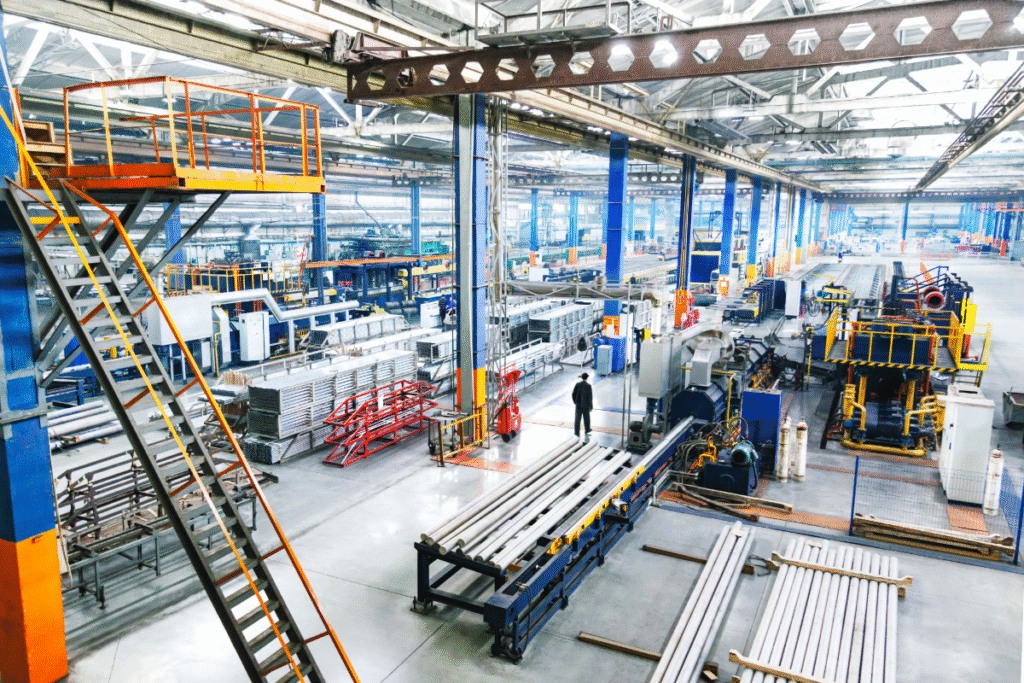
The Fruits of Freedom: A Reshored American Economy
The reshoring of American manufacturing, driven by these free-market principles, will yield incredible benefits. This is not a nostalgic dream. It is the logical outcome of sound economic policy. We will see the emergence of a stronger, more resilient, and more innovative America.
True Supply Chain Resilience
When essential goods are Made in USA, or by trusted allies, we insulate ourselves from foreign coercion. No longer will an authoritarian regime be able to threaten our supply of life-saving medicines. No longer will a crisis on the other side of the world mean empty shelves at home. This is economic sovereignty. It is a vital component of national strength.
A New Wave of Innovation
History shows that innovation flourishes when engineering and production are co-located. The people who design the products can work directly with the people who build them. This creates a virtuous cycle of constant feedback and improvement. It accelerates the development of new technologies and techniques. This is how a nation maintains its competitive edge.
Stronger Families and Communities
This revival also builds stronger families and communities. A robust manufacturing base creates stable, high-paying jobs. It empowers individuals to build prosperous lives for themselves. It gives them the means to support their families, own homes, and invest in their futures. They can achieve this through their own effort, independent of government assistance.
The rebuilding of the American middle class is not a government project. It is the organic outcome of restoring economic freedom. Imagine a town where a factory, once shuttered, reopens with new technology.
This creates hundreds of well-paying jobs. These workers then support local small businesses—the diner, the hardware store, the auto mechanic. The local tax base grows, funding better schools and public services without raising rates. This is the ripple effect of a single investment in freedom. This is the vision we are fighting for.
A Choice Between Growth and Managed Decline
The choice before us is clear: growth or managed decline. The passage of the OBBBA proves the blueprint for reshoring American manufacturing is politically achievable. For every dollar of value created in manufacturing, another $1.34 is created elsewhere in the economy. This is the power of productive enterprise. The first battle is won. Now we must push forward on deregulation, energy dominance, and workforce freedom.
Join Able Politics, today. Together, let us champion economic liberty to restore our industrial might and secure America’s future.